Why a first clean is a different job than upkeep
A regular clean keeps a house where it already is. A deep clean has to deal with everything that regular cleaning stopped reaching: soap film on shower glass, grease that has set on the range hood and cabinet fronts, dust packed along baseboards, and dirt that has settled into grout lines and stayed there for seasons.
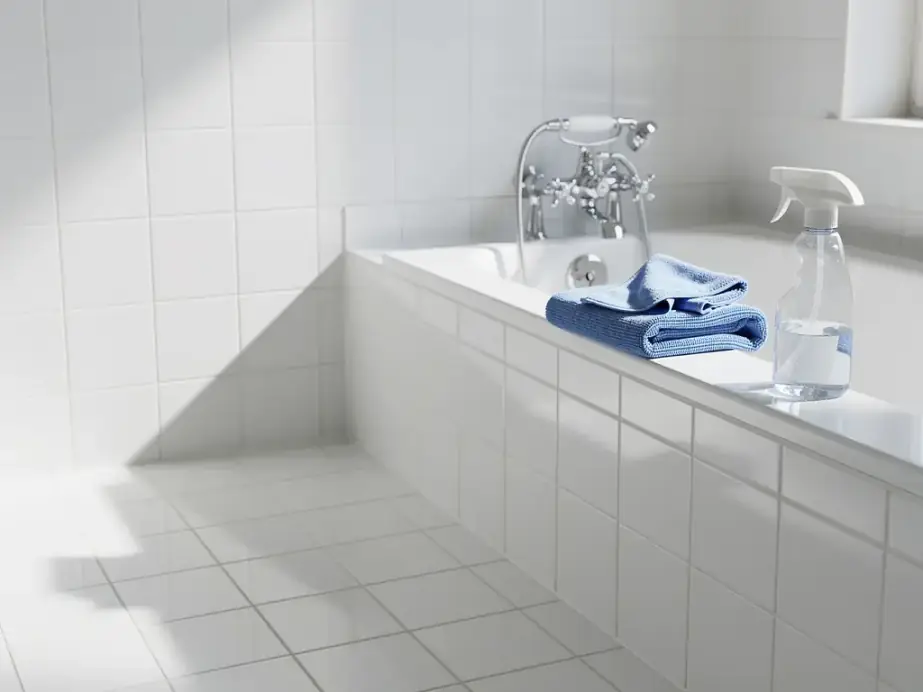
That is why a first clean takes longer than the visits that follow it. The surfaces are not just dusty, they carry layers, and a quick wipe only moves the top layer around. Grout is the clearest example. It is porous, so it holds soil that a damp cloth never touches, and it has to be worked with a brush and a cleaner that is given time to loosen the build-up before it is rinsed off.
The other half of the job is the places nobody looks. Behind and beside the refrigerator and stove, under the edge of the tub, inside the tracks of sliding doors, along the tops of door frames. These are the spots where a house quietly collects what the weekly clean skips, and they are where a deep clean earns the name.
The order a deep clean runs, top to bottom
Order matters more than effort. The work goes high to low, so that dust and drips fall onto surfaces that have not been cleaned yet. Ceiling corners, light fixtures, vents and the tops of cabinets come first, dry, with a duster or vacuum attachment. Wet work done before dusting just turns that dust into mud.
Wet cleaning comes next, room by room. In kitchens that means degreasing counters, cabinet fronts, the backsplash and the outside of appliances, then pulling the appliances out to clean the floor and wall behind them. In bathrooms it means scale and soap scum on tile, tub, tap and glass, plus the grout, and a disinfecting pass on the surfaces hands and bodies touch most. Baseboards, window sills and door frames get washed rather than dusted.
Floors always come last. Vacuuming and mopping at the end picks up everything that fell during the rest of the work, and nobody walks over a finished surface to reach an unfinished one. If you are in Monroe, the Lehigh Valley or Northampton County and want a house taken through this sequence, call 484-898-7190 and ask for the free estimate.
Keeping the house at the level you just reached
The first clean is the hard one. After it, the aim is to stop the build-up from starting over, and that takes less than most people think. Wiping shower glass and tile after use, squeegeeing a glass door, and cleaning up cooking splatter while it is still soft stops most of the film and grease before it sets.
A short weekly routine on the high-traffic spots does the rest: counters, sinks, toilets, floors and the front of the stove. Grout stays bright when it is kept dry and scrubbed lightly now and then, instead of left until it has to be rescued. Pulling appliances out once or twice a year and checking the floor behind them catches problems while they are still small.
Some homes need an initial clean because they have been neglected for a stretch, others because a tenant is leaving or a new owner is moving in. Either way, tell the estimator what the rooms are like and how long it has been, so the scope of the job is set properly before anything starts.